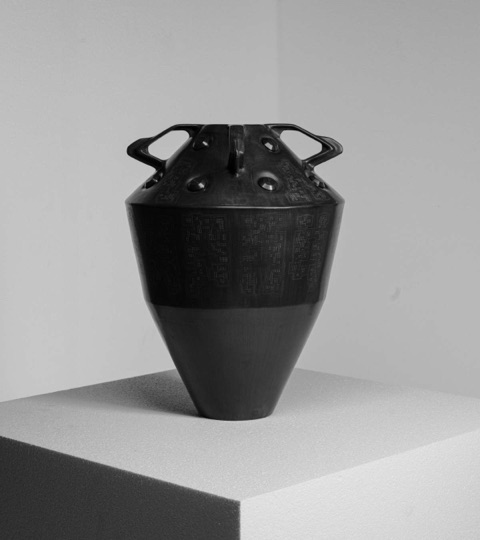


Carbonized ceramic + steel
2025–2026
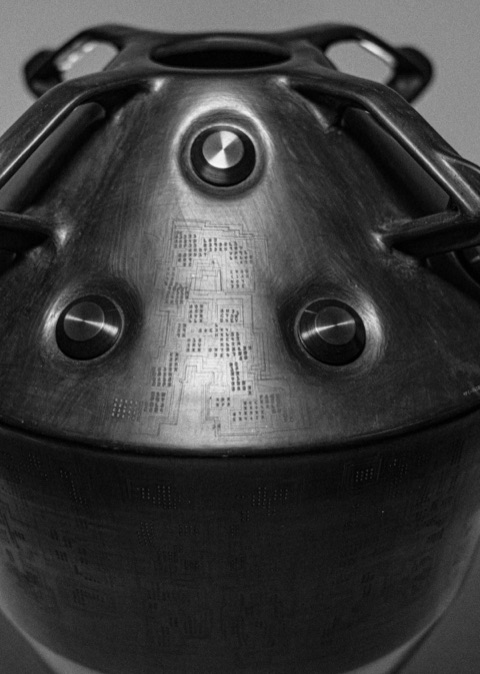
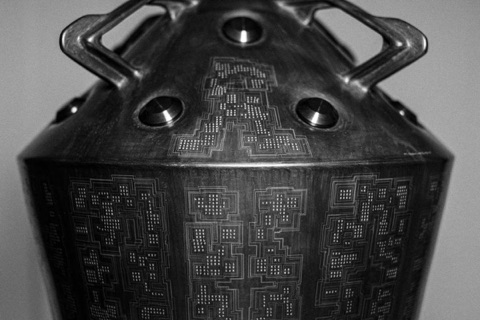
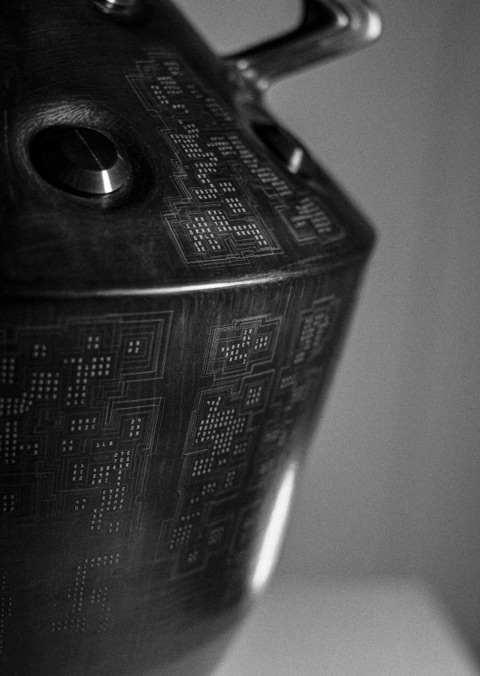
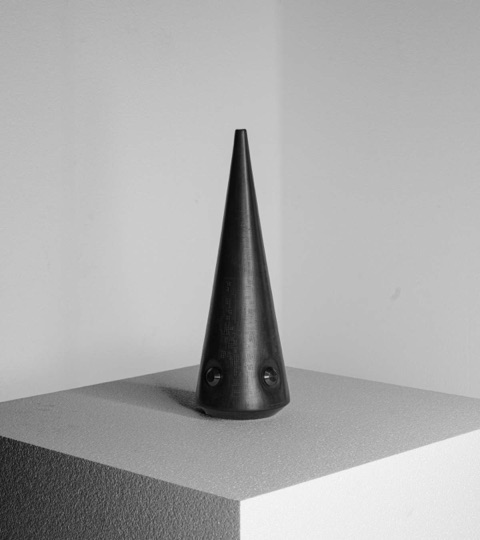
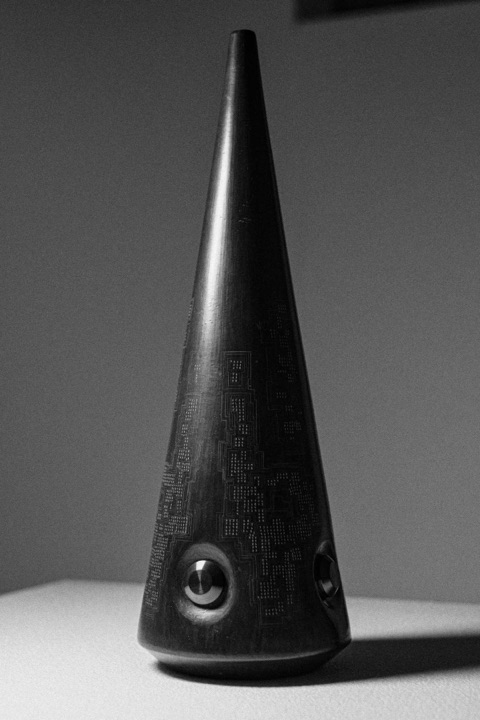
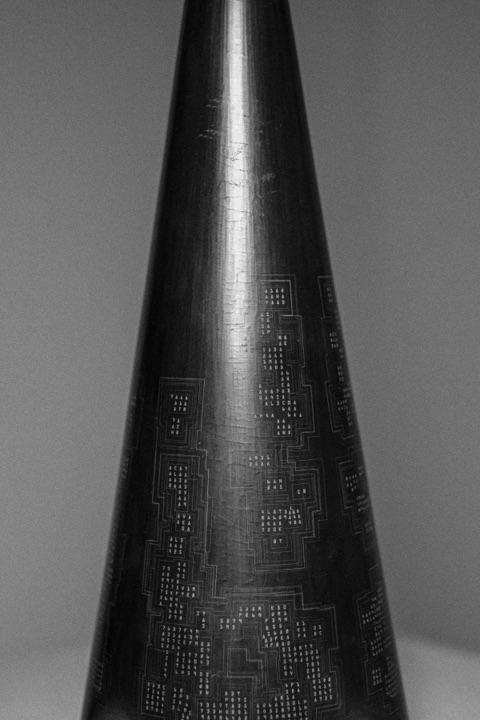
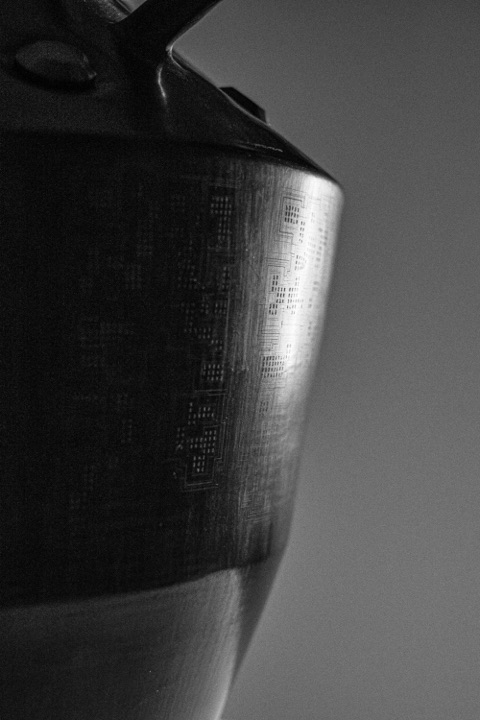
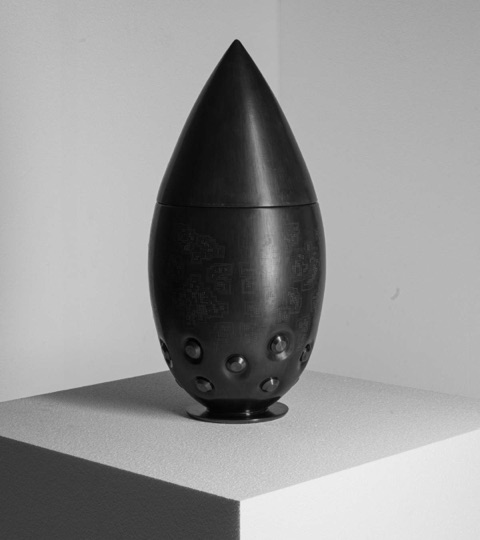
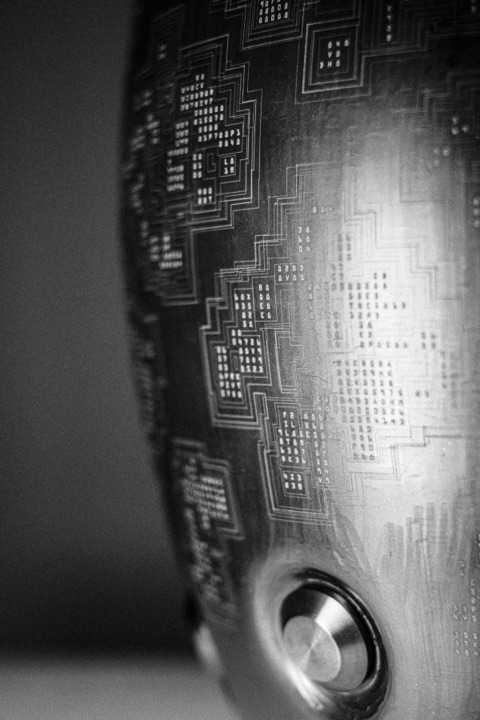
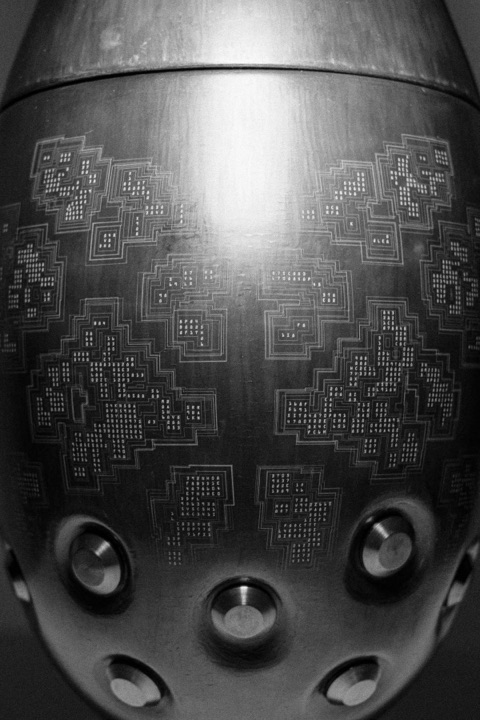
Two-piece ogival urn derived from the Villanovan biconic type, presented on a carbonized steel pedestal. A studded belly and micro-engraved central band define the body.
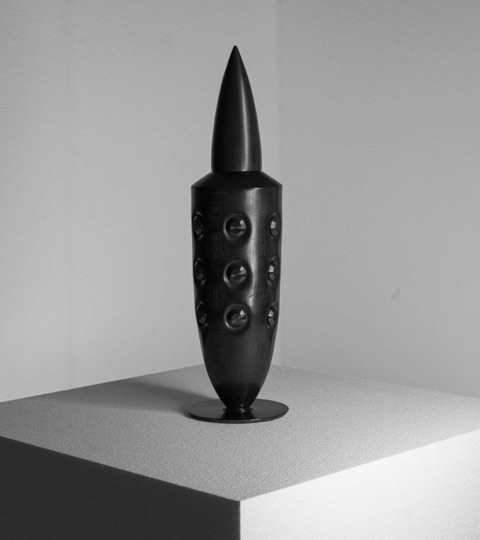
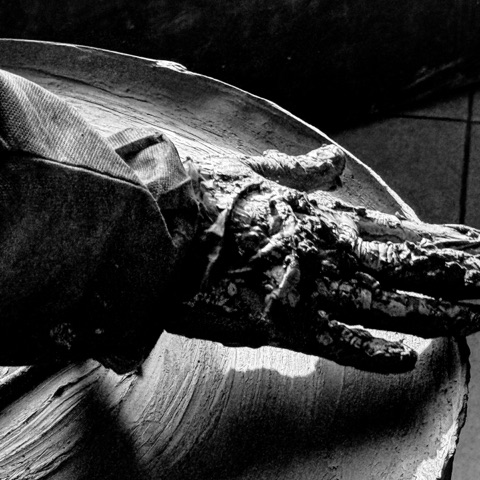
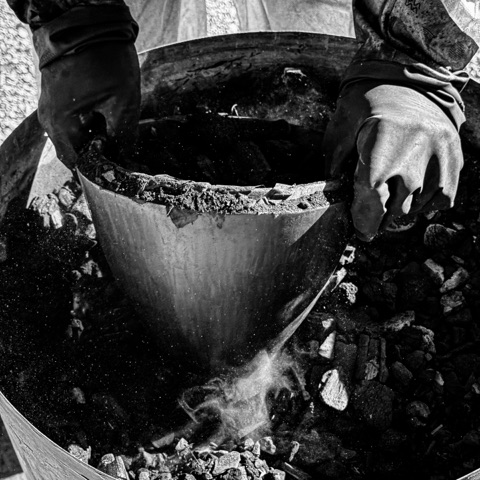
Mare Fecunditatis is a cycle of six vessels developed under the distant pressure of Yukio Mishima's The Sea of Fertility. In carbonized ceramic and steel, the work treats carbon not simply as matter, but as residue: an index of combustion, memory, and historical exhaustion. Ancient funerary typologies are subjected to measured technological incursions, producing forms suspended between relic and instrument, sepulchral object and engineered artifact. What emerges is not a narrative of collapse, but a condition of persistence within collapse—where beauty and decay remain bound to the same material destiny.
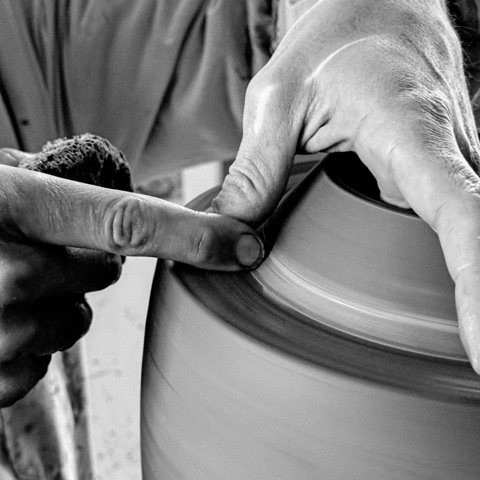
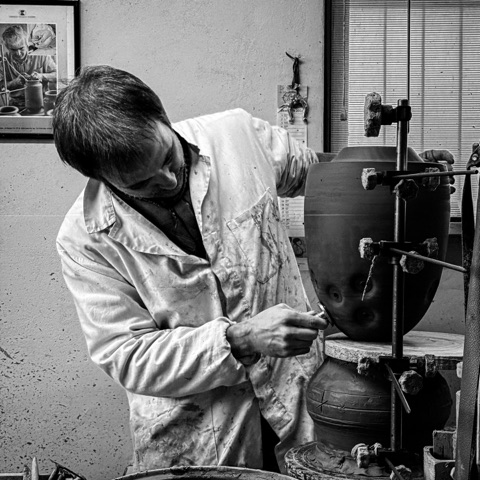
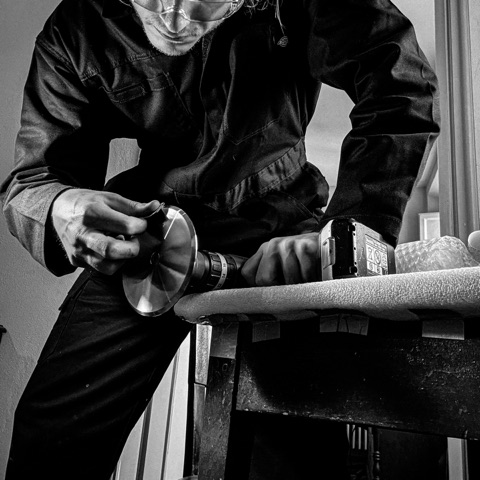
The collaboration with Buccheri Antonio Rossi builds on the legacy of a historic workshop linked to the revival of bucchero through its early work with Gio Ponti. In Mare Fecunditatis, controlled forming reframes bucchero through sharpened, thinned, and cantilevered forms, while laser texturing introduces a synthetic patina across its hand-burnished surfaces. Integrated with CNC-machined steel through calibrated interfaces and tight tolerances, bucchero is transformed from vernacular material into a high-tech medium defined by industrial exactitude.
Carbonized ceramic + steel
2025–2026
Two-piece ogival urn derived from the Villanovan biconic type, presented on a carbonized steel pedestal. A studded belly and micro-engraved central band define the body.
Carbonized ceramic + steel
2025–2026
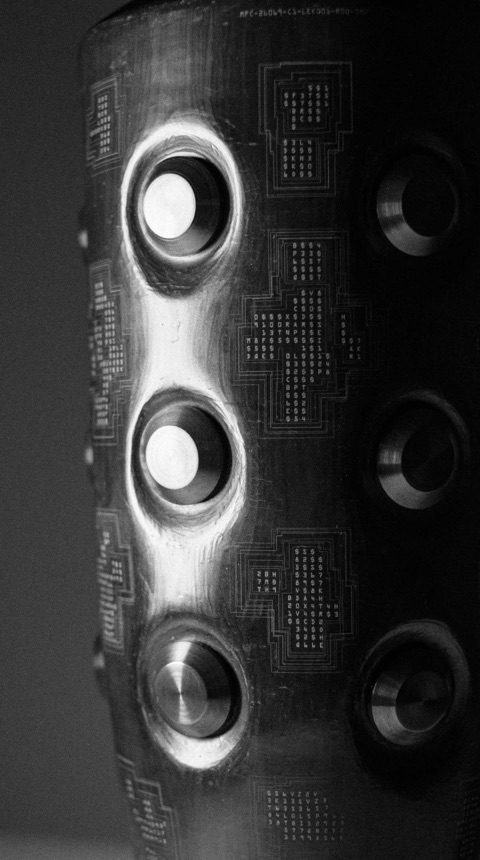
Two-piece form based on the Greek funerary lekythos, developed as a slender projectile-like body on a carbonized steel pedestal. Studs and punctuated micro-engraved fields organize the midsection.
Carbonized ceramic + steel
2025–2026
Single-piece vessel derived from the Panathenaic belly amphora. A segmented body, four angular crested handles, studded accents, and a micro-engraved midsection define its structure.
Carbonized ceramic + steel
2025–2026
Single-piece tapered form based on the Egyptian alabastron. The body is reduced to a continuous profile with a studded base and a micro-engraved midsection.
Carbonized ceramic + steel
2025–2026
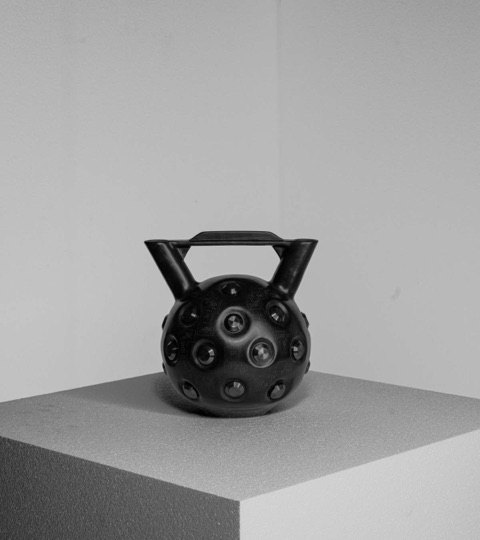
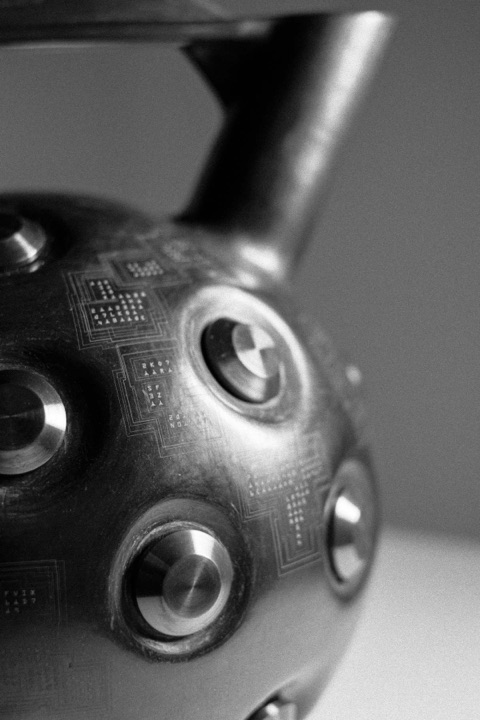
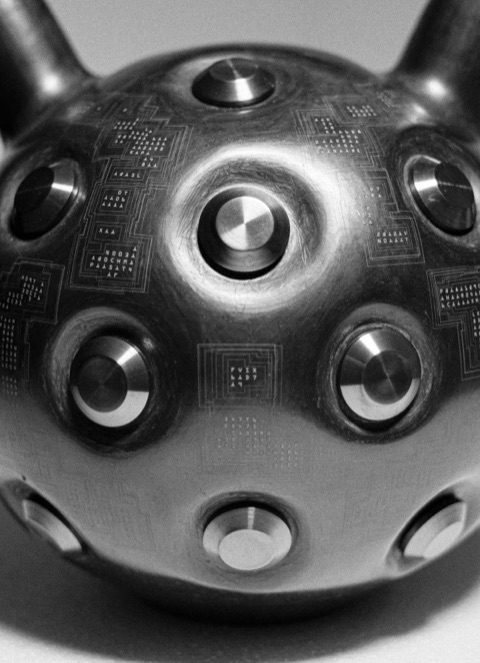
Rounded vessel derived from ancient zoomorphic askos archetypes. A geometric array of studs and micro-engraved fields structures the body, while the handle opens into two interconnected horn-like forms.
Carbonized ceramic + steel
2025–2026
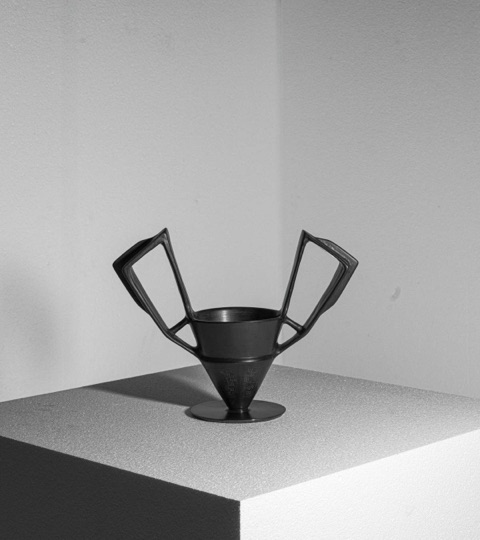
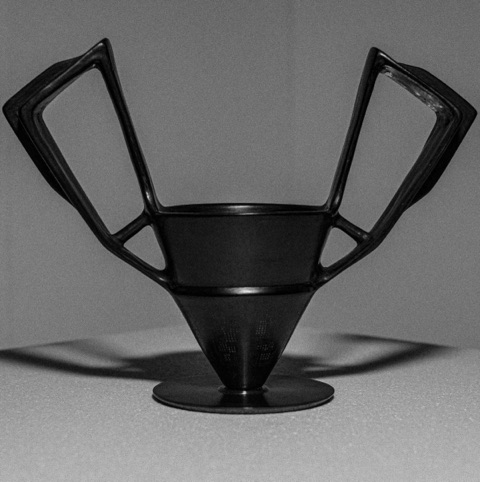
Form derived from the Etruscan kantharos, presented on a carbonized steel pedestal and defined by two monumental crested handles. Micro-engraved inscriptions articulate the base and outer handle surfaces.
Mare Fecunditatis stands between Italy’s material history and our present techno-cultural landscape. Each piece arises from the convergence of craft, industry, and computation.